Backflow Testing & Repair in Raleigh, Goldsboro, Wayne County & Johnston County
What property owners with an irrigation systems need to know need to know to stay in compliance and ensure safe drinking water.
If you own a business, manage a property, or have a home with an irrigation system, you may have heard the word backflow and wondered what it actually means.
[Jump To Section] Limited-Time $50 Backflow Test Special
It's all about protecting the clean water supply.
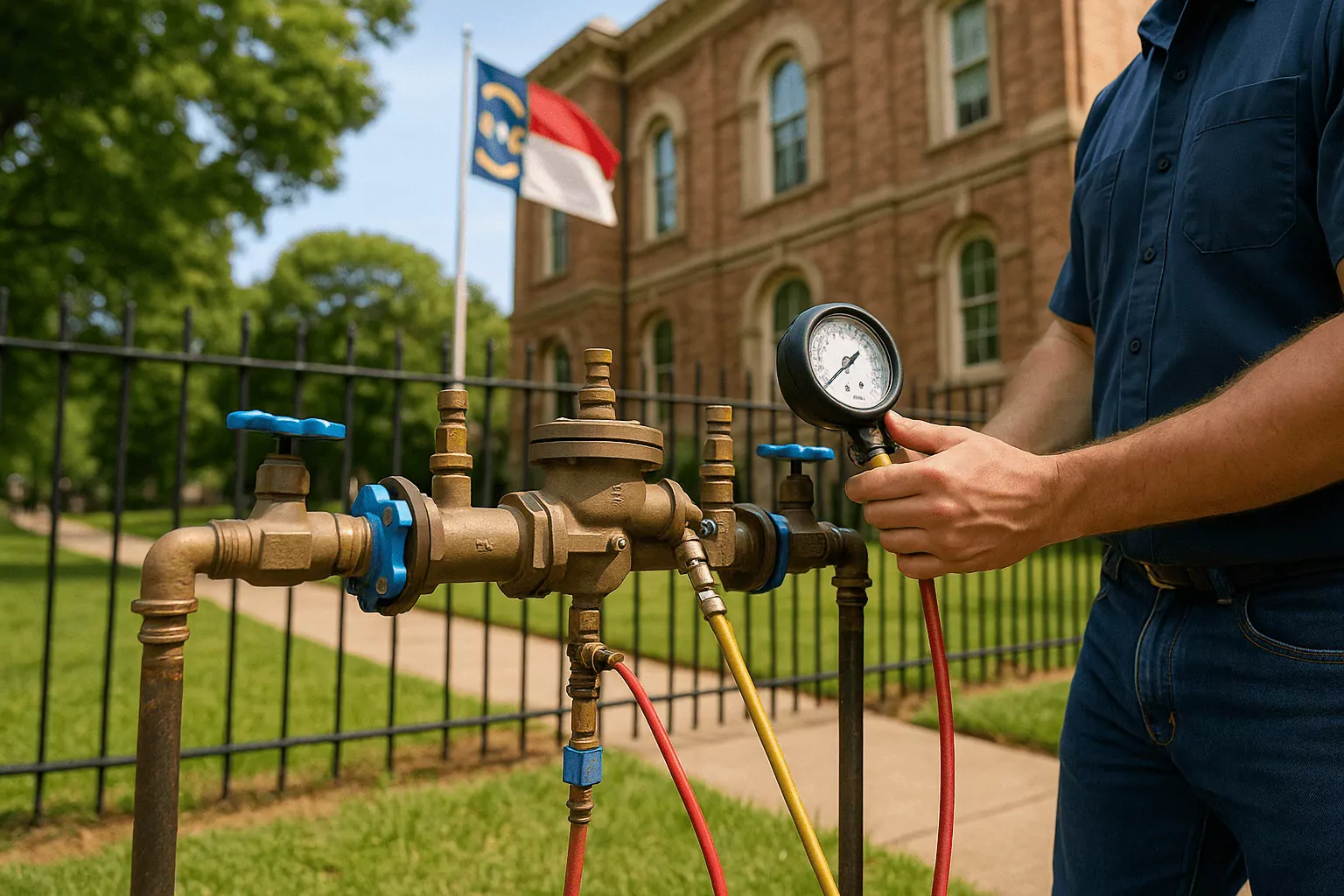
A backflow prevention device helps stop water from flowing backward into the public water system. In simple terms, it helps make sure water from your home, business, irrigation system, or equipment does not flow back into the clean water everyone uses.
For many businesses and some homeowners, backflow testing is not optional. It may be required by your city, county, or water provider.
At Rosewood Plumbing, we provide backflow testing, backflow repair, and backflow replacement for customers in and around Goldsboro, Wayne County, Johnston County, Raleigh, and surrounding North Carolina communities.
The Difference Between a Backflow Tester and a Licensed Plumber
This is where many property owners get surprised.
A person can be certified to test backflow devices without being licensed to repair plumbing. That means some testers can tell you whether your device passed or failed, but if it fails, they may not be able to fix it.
Rosewood Plumbing is different.
We can provide certified backflow testing, and we are also a licensed plumbing company. If your backflow preventer fails, we can help repair or replace it instead of simply sending you to someone else.
That can save time, reduce confusion, and help you get back into compliance faster.
Who Needs Backflow Testing?
Keeping your drinking water safe starts with understanding Backflow Testing and how often it should be scheduled.
Backflow requirements vary depending on where your property is located and how your water system is used.
In general, backflow testing is most common for:
- Businesses
- Commercial buildings
- Restaurants
- Medical offices
- Retail locations
- Churches
- Schools
- Property-managed buildings
- Homes with irrigation or sprinkler systems
Most regular homeowners do not need a backflow test unless they have an irrigation system or another water setup that requires a backflow prevention device.
The counties in and around Raleigh and Goldsboro generally require routine certification to ensure backflow preventers keep contaminants from entering the public water supply. Whether you manage a commercial property, oversee a multifamily community, or maintain a residential irrigation system, timely testing protects public health and keeps you compliant.
In Raleigh, residential irrigation backflow assemblies are required to have a passing operational test submitted every three years, while commercial irrigation backflows are required to be tested annually. Other backflow assemblies are generally tested annually based on the property’s schedule.
Because local requirements can vary, the best thing to do is check the notice you received from your city or water provider, or call a certified backflow tester who can help you understand what applies to your property.
What Is a Backflow Prevention Device?
A backflow prevention device is installed on a water line to help prevent contaminated or non-potable water from flowing backward into the clean water supply.
These devices are often found on:
- Irrigation systems
- Commercial plumbing systems
- Fire suppression systems
- Restaurant equipment
- Medical or dental equipment
- Certain industrial or business water connections
Backflow devices are usually installed after the water meter. Once installed, they often need to be tested on a recurring schedule by a certified backflow tester.
Why Backflow Testing Matters
Backflow testing confirms that the device is working properly.
Like any mechanical device, a backflow preventer can wear out over time. In many cases, devices may start needing repair after several years of use. If a device fails a test, the property owner may have a limited amount of time to have it repaired and retested.
That is why it is important to work with someone who understands both sides of the job: testing and plumbing repair.
Your Local Backflow Testing Guide
To make planning easier, this guide explains city expectations, risk factors that affect frequency, and proven scheduling strategies. For quick reference, you can explore Backflow Testing in Raleigh services and resources to stay ahead of due dates. By the end, you will know exactly when to test, what to expect during an inspection, and how to minimize disruptions.
Local Rules: How Often Backflow Testing is Required
Backflow testing rules are usually set and enforced by your local water provider, city, town, or county through a cross-connection control program. North Carolina sets broader water-safety requirements, but the exact testing schedule can vary by location and property type. Businesses are often required to test annually, while some residential irrigation systems may follow a different schedule depending on the local utility. If you received a backflow notice, the safest next step is to contact a certified backflow tester or your local water provider.
Raleigh's Cross-Connection Control Program generally requires annual testing of all backflow prevention assemblies by a certified tester. This applies to reduced pressure zone devices, double check valve assemblies, and pressure vacuum breakers commonly found on irrigation, fire sprinkler, and domestic water lines. New installations must be tested upon installation, and any device that is repaired or relocated must be retested promptly to verify proper operation. For seasonal irrigation systems, testing before spring startup is strongly recommended to catch any freeze-related damage. You can review current requirements and forms on the City of Raleigh website at Raleigh Cross-Connection Control Program for authoritative guidance.
Consider a real-world example from a small cafe in downtown Raleigh that received a notice when its due date lapsed by several weeks. The owner scheduled testing immediately, but the device failed due to debris lodged in a check valve after winter construction nearby. A same-day repair and retest restored compliance, and the tester submitted the report by the due date on the utility notice. The experience underscores how annual testing plus prompt retesting after repairs prevent fines or service interruptions. If you need help aligning to local rules and timelines, visit our backflow prevention services page for support and scheduling options.
Risk Factors That Change Your Backflow Testing in Raleigh Schedule
While annual testing meets the city's baseline, certain risk factors warrant more frequent checks to protect potable water. High-hazard facilities such as restaurants, labs, healthcare, breweries, and chemical handling sites face greater cross-connection risks. Older assemblies, devices exposed to freezing, or systems with frequent pressure swings are more likely to drift out of tolerance. Buildings undergoing renovations, tenant build-outs, or new equipment tie-ins can also disturb hydraulic conditions and introduce debris. In these situations, an interim test mid-year or after major plumbing work can prevent failures and urgent callouts.
Property managers often benefit from a clear trigger list that prompts a proactive retest between annual certifications. Frequent nuisance alarms from booster pumps or pressure-reducing valves suggest unstable pressure that may stress checks and relief valves. An unexplained drop in water pressure, discolored water after main breaks, or sprinkler contractor work are all signals to verify performance. Manufacturer recommendations and past test data can guide whether a semi-annual internal check is prudent for your site. Coordinating with a certified tester helps you tailor a schedule without over-testing or missing critical windows.
Planning and Scheduling Backflow Testing in Raleigh Without Disruption
A reliable testing routine begins with a current inventory of all assemblies, their locations, sizes, and due dates. Group devices by building or campus zone to streamline access and reduce service downtime. Choose a certified tester with calibrated gauges and experience across RPZ, DCVA, and PVB devices to ensure accurate results and proper reporting. Schedule shoulder-season appointments to avoid the spring irrigation rush and give yourself time for any needed repairs and retests. For streamlined coordination or to request a proposal, you can contact our team to set reminders, confirm access logistics, and align with utility deadlines.
Here is a practical timeline many Raleigh facilities use to stay ahead of compliance with minimal disruption.
Two months before the due date, confirm device count, access requirements, and the preferred testing window with your provider.
Four weeks out, alert occupants to brief water shutoffs and coordinate with your sprinkler or irrigation contractor if multiple systems share feeds.
During testing week, your technician records differential pressures, tags assemblies, and completes the utility report for submission.
After testing, store certificates, update your asset list, and review any recommendations for maintenance; for more education, see our related guide to common backflow preventers.
How long do Backflow Tests Take?
Most tests take 20 to 45 minutes per device, with a brief water shutoff while check valves and relief valves are measured. Certified testers like our team at Rosewood Plumbing use calibrated differential pressure gauges to verify that check valves hold minimum required values and that relief valves open correctly.
You will receive tagged results on the device and a formal report suitable for the City of Raleigh submittal process.
Backflow Testing for Businesses
Businesses are one of the main groups affected by backflow testing requirements.
If you own or manage a commercial property, your backflow device may need to be tested every year. In many cases, the device is outside and accessible, which means testing can sometimes be completed without the business owner needing to be present.
This can be helpful for:
- restaurants
- retail shops
- office buildings
- salons
- gyms
- churches
- warehouses
- small businesses
- property managers
If your business received a backflow notice, Rosewood Plumbing can help you figure out what is needed and schedule the test.
Businesses can request early-morning or off-hour windows to reduce customer impact, and multi-tenant sites can sequence shutoffs to keep critical areas online. Staying transparent with occupants about timing and duration prevents surprises and maintains trust.
What Happens If Your Backflow Test Fails?
If your backflow device fails, do not panic. A failed test does not always mean the entire device needs to be replaced.
If a device fails, the most common reasons are debris after main breaks, worn seals and springs, or damage from freezing weather. A qualified technician can often correct issues quickly with cleaning or repair kits matched to your assembly's make and model.
After repair, a retest confirms proper operation and restores compliance for reporting to the utility. To reduce repeat failures, add simple preventive steps like seasonal insulation, strainer maintenance, and stable pressure control. For background on industry best practices, explore the American Water Works Association's resources at AWWA Cross-Connection Control.
In many cases, the device may be repairable.
Common next steps include:
- Identify why the device failed.
- Provide a repair estimate.
- Repair the device if possible.
- Retest the device.
- Submit or provide documentation as required.
If the device cannot be repaired, replacement may be needed.
The important thing is to act quickly, especially if your water provider has given you a deadline.
Schedule Backflow Testing & Repair Services With Rosewood Plumbing
The bottom line is that Backflow Testing in Raleigh is generally required every year, with added checks after installation, repairs, or events that disturb system pressure. By tracking due dates, understanding risk factors, and scheduling ahead, you will protect your potable water and stay compliant with local cross-connection control rules.
If you are ready to get on a reliable schedule, connect with Rosewood Plumbing in Raleigh or Goldsboro, NC for certified testing, repairs, and timely reporting.
Annual testing guidance for Raleigh backflow devices, with local rules, scheduling tips, and compliance resources to protect your water supply.
Limited-Time $50 Backflow Test Special
Rosewood Plumbing is offering a limited-time! This is a great option if:
- your business needs a backflow test
- you received a notice from your city or water provider
- you have a home irrigation system
- your backflow device is due for testing
- your previous test failed and you need repair help
The $50 offer applies to eligible standard backflow tests in select service areas. Repairs, replacement parts, additional devices, inaccessible devices, failed test repairs, and multi-device commercial properties may be priced separately.
Compared to other local backflow testers and plumbers, this is a great deal
Rosewood Plumbing provides backflow testing and repair in and around:
- Goldsboro
- Wayne County
- Johnston County
- Raleigh
- Wake County
- 27603 and nearby Raleigh areas
- surrounding local communities
If you are outside these areas, contact us and we will let you know if we can help.
Whether you need a simple annual test, help understanding a notice, or a repair after a failed backflow inspection, Rosewood Plumbing can help.
We do not just test backflow devices. We can repair or replace them too.
Call Rosewood Plumbing today to schedule your $50 backflow test.
Need backflow testing in Raleigh, Goldsboro, Wayne County, Johnston County, or nearby areas? Contact Rosewood Plumbing today.
Frequently Asked Questions
Do Raleigh regulations require annual backflow testing for every property?
Most properties with a backflow prevention assembly connected to the public water supply must complete annual testing with a certified professional. This includes commercial buildings, multifamily communities, and residential irrigation systems. Properties without a cross-connection or without an assembly are not typically subject to testing, but new connections and renovations often add devices. The City of Raleigh issues notices with due dates and expects timely submittal of passing reports. Always confirm your site's specific requirements with the water provider or review the city program page for the latest guidance.
When is the best time of year to schedule backflow testing in Raleigh?
Schedule before your due date and, for irrigation, before spring startup to catch freeze-related issues. Many owners prefer late winter or early spring so repairs and retests fit before peak season. Commercial sites often choose early mornings or shoulder seasons to minimize customer impact. After any plumbing modifications, construction, or main repairs, book a prompt check to verify protection. The key is to test early enough to fix problems without rushing against a deadline.
How long does a typical backflow test take and will my water be shut off?
Testing usually takes 20 to 45 minutes per device, depending on size, location, and accessibility. Your water is turned off briefly while the tester measures check and relief valve performance. For businesses, technicians can sequence tests to avoid disrupting critical operations and coordinate with occupants. Multi-device campuses benefit from planned access routes and a clear testing order to keep essential areas live. Good communication between building management and the tester ensures a smooth process with minimal downtime.