
Backflow Testing in Raleigh: Costs, Codes, and Scheduling
Clear guidance for Raleigh homeowners and property managers on costs, timelines, and compliance for reliable backflow testing.
Safe Water and Raleigh Code: Why Testing Matters
Backflow Testing in Raleigh: Health Risks and Real-World Scenarios
Backflow Testing in Raleigh protects your building's potable water from contamination that can enter through pressure changes and cross-connections. When fire sprinklers, irrigation lines, or boilers connect to drinking water, a sudden back-siphon can draw chemicals, sediment, or bacteria backward. Even small events, like a main break or a nearby hydrant use, can shift pressures enough to cause a problem. Backflow assemblies are designed to stop that reverse movement, but springs weaken and seals wear with time. Routine verification ensures the device still closes properly under stress and keeps your tap water safe for daily use.
Real incidents frequently start with harmless tasks, such as fertilizing a lawn or shock-treating a pool, then escalate when water pressure dips. Without a working assembly, those substances can travel into fixtures and fountains throughout a property. Backflow inspection Raleigh services simulate pressure differences to confirm valves hold tight and relief ports discharge correctly. Results document the exact condition of your assembly and guide any required repairs. The peace of mind is worth it, especially for sites serving children, seniors, or immunocompromised guests.
Cross-connection control Raleigh requirements at a glance
Most properties that have irrigation, fire protection, or commercial equipment fall under cross-connection control Raleigh rules that require annual testing. The city tracks devices by address and type, and it expects timely, accurate test reports from certified testers. Assemblies include double check valves, pressure vacuum breakers, and reduced pressure zones, each matched to specific hazards. Missing tests can trigger reminders, fines, or shutoff notices in persistent cases. Staying current avoids penalties and proves your system is protecting public health as intended.
Owners should confirm their device types and due dates, because different assemblies may share a schedule but have unique testing steps. Many facilities maintain a calendar that aligns with permit renewals or seasonal irrigation startups. Partnering with a Raleigh plumber familiar with municipal reporting helps prevent clerical errors that delay compliance. Backflow prevention Raleigh programs emphasize both safety and accountability, and detailed reports satisfy both goals. Keep copies of tags and paperwork on site for inspectors and insurance providers.
Backflow prevention Raleigh strategies for homes and businesses
Effective backflow prevention Raleigh planning starts with a proper survey of all potential cross-connections on the property. Irrigation vacuum breakers, boiler feed protection, and commercial equipment air gaps should be mapped and labeled. Choose assemblies appropriate for hazard level, then ensure they remain accessible above grade and out of flood-prone spots. Good placement makes testing straightforward and reduces repair costs over the life of the device. Clear labeling also helps new staff and vendors find the right equipment fast.
Policy supports hardware, so establish routine checks, training, and response procedures. Teach staff to report leaks, missing caps, and vandalized enclosures immediately. Schedule pre-season checks for irrigation, and coordinate with fire system contractors so annuals align efficiently. A backflow inspection Raleigh appointment verifies each assembly functions, while maintenance logs prove diligence if questions arise. Solid documentation is a cornerstone of cross-connection control Raleigh compliance and risk management.
What Happens During a Professional Test
Backflow Testing in Raleigh: What Inspectors Check
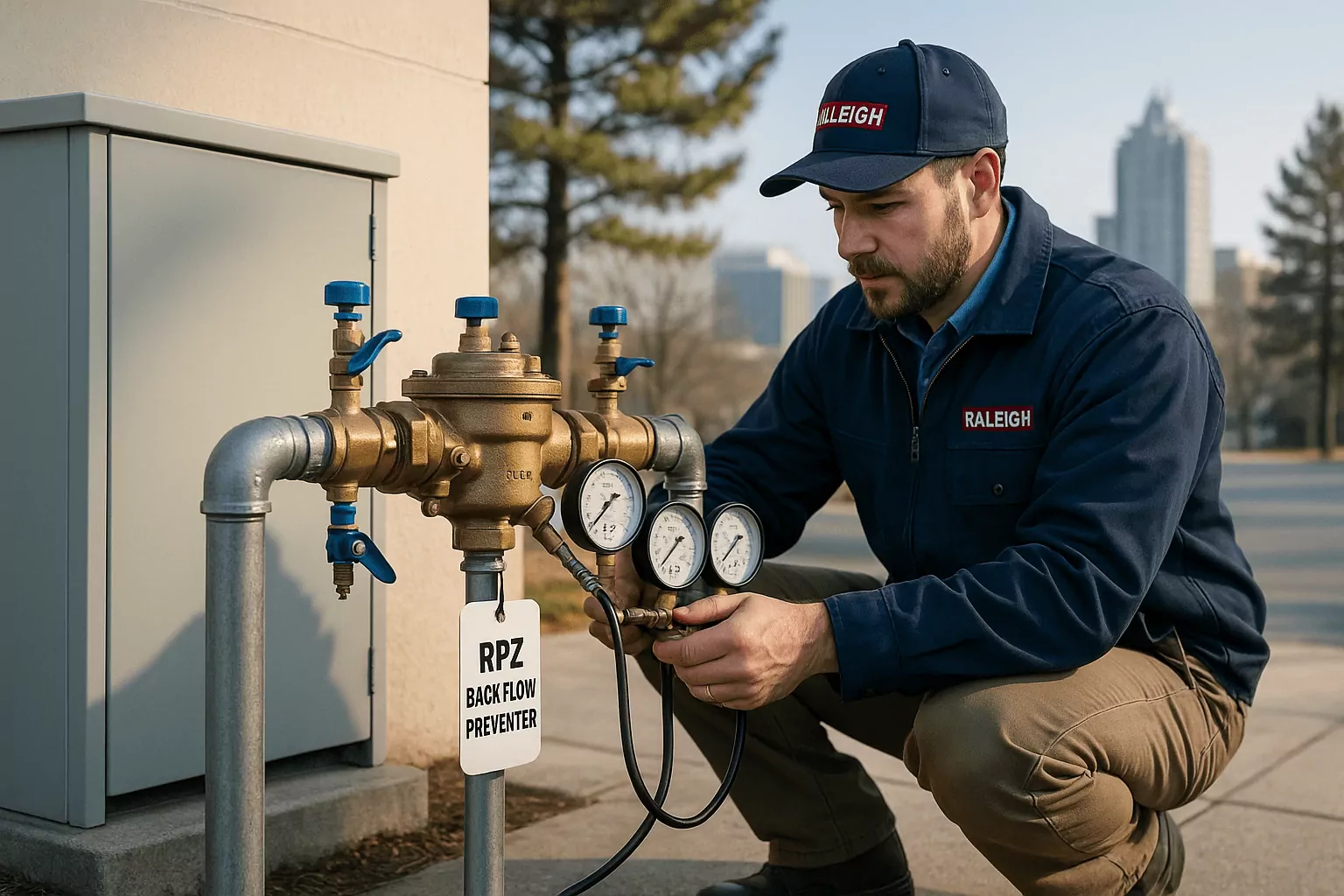
Certified testers isolate the assembly, attach calibrated gauges, and verify shutoffs before any readings are taken. They measure differential pressure, check check-valve closure tightness, and observe relief-valve discharge where applicable. The goal is to prove the device prevents reverse flow under realistic conditions, not just when water is static. If results fall below minimum thresholds, the unit fails and must be repaired or replaced to meet code. A passing test ends with a signed report and an updated tag on the assembly.
Expect water interruption at that specific line for a short period, especially for irrigation and fire systems under maintenance windows. Testers protect interiors by using buckets, hoses, or temporary drains for relief-valve discharges. They also verify orientation, clearance, and enclosure integrity to ensure future access and freeze protection. Many teams photograph nameplates and serial numbers to avoid transcription errors on official forms. Backflow inspection Raleigh providers then submit documentation to the city's database on your behalf when permitted.
RPZ testing Raleigh and other assembly types explained
Reduced Pressure Zone assemblies add a relief valve between two check valves, offering the highest protection for severe hazards. RPZ testing Raleigh confirms the relief opens at the correct pressure and both checks seat firmly under backflow conditions. Double check valves suit moderate hazards and rely on tight closure without a relief discharge. Pressure vacuum breakers protect against backsiphonage on irrigation but are not designed for backpressure risks. Choosing the right assembly depends on your site's equipment, elevation changes, and chemical exposure.
During service, testers follow manufacturer procedures that match each assembly's design. RPZs require careful monitoring of relief discharge, so placement with proper drainage is crucial. Double checks are checked for differential pressure across each check, ensuring reliable closure. Vacuum breakers are inspected for broken floats, cracked housings, and missing caps that undermine function. Documenting type-specific results keeps cross-connection control Raleigh records accurate for audits and renewals.
Documentation, tags, and passing results
When the assembly passes, you receive a signed test form, a legible device tag, and often a digital copy for records. Tags typically show device type, size, serial number, tester certification, and test date. Accurate paperwork proves timely compliance and speeds future visits by giving techs essential details upfront. Many property managers store PDFs in shared folders and place a printed copy near mechanical rooms. That simple habit prevents delays when inspectors or insurance adjusters request evidence.
If a device fails, the tester explains which components did not meet standards and outlines repair options. The report will note spring replacements, seat refacing, or full device swaps if parts are obsolete. After repairs, a retest verifies performance and updates your compliance status with the city. Clear notes also help the next Raleigh plumber understand your assembly's service history. Strong documentation supports backflow prevention Raleigh planning and budgeting over time.
Pricing, Timing, and Scheduling
Typical costs and money-saving tips
Most single-assembly tests fall into a modest price range, with volume discounts for properties that bundle multiple devices. Prices vary by assembly size, location, and whether access is indoors, outdoors, or in a pit. Travel distance and urgent turnaround can add fees, so plan ahead when possible. Ask for quotes that include filing with the city to avoid separate administrative charges. Annual agreements often lock in rates and simplify reminders for renewals.
Smart scheduling reduces operational disruption and saves labor time for your vendor. Group tests for irrigation, boilers, and tenant suites into one coordinated visit. Share device lists, gate codes, and contacts so the Raleigh plumber arrives prepared. Consider off-peak hours or seasonal windows when systems are already offline. Good coordination helps keep backflow inspection Raleigh costs predictable year after year.
How long it takes and best times to book
Standard tests often take 20-45 minutes per device when access is clear and shutoffs operate smoothly. Complex setups, large diameters, or tricky pits add time for safe isolation and drainage. Spring is a busy season as irrigation systems come online and deadlines cluster. Book early to secure preferred dates and to allow time for any repairs before due dates. Many providers offer reminder programs that email or text you 30 days before testing is due.
Some properties coordinate testing alongside preventive maintenance on boilers or fire systems to minimize total downtime. This approach keeps technicians already on site and reduces repeat mobilizations. If deadlines are tight, ask about expedited reporting or same-week slots. Transparent timelines help avoid city notices and keep tenants informed about brief water interruptions. Efficient planning ensures Backflow Testing in Raleigh stays a quick, predictable task.
Scheduling Backflow Testing in Raleigh with a Raleigh plumber
Start by gathering your device inventory, past reports, serial numbers, and access details. Send that packet to a certified Raleigh plumber and request a written scope, price, and filing plan. Confirm they perform RPZ testing Raleigh, double checks, and vacuum breakers so all devices can be handled together. Ask about proof of calibration for gauges and current tester certifications. Clear vetting protects your compliance and reduces retest risks.
When booking, set expectations for on-site contacts, shutoff windows, and any after-hours needs. Provide photos of assemblies to anticipate ladders, pits, or confined space requirements. Align testing with internal calendars so building operations are minimally affected. After the visit, verify you received the tag and city-submitted report for your records. Smooth coordination with a Raleigh plumber keeps cross-connection control Raleigh tasks on track.
Fixes, Failures, and Long-Term Maintenance
Common reasons assemblies fail and how pros repair them
Age, mineral scale, and debris are top culprits behind weak springs and leaking seats. Freezing, UV exposure, and vandalized enclosures also shorten device life and test margins. Professionals disassemble, clean, and replace kits with manufacturer parts to restore performance quickly. If housings are cracked or obsolete, replacement may be more cost-effective than repeated repairs. Clear failure notes from a backflow inspection Raleigh visit help guide the right decision.
Preventive steps shrink failure rates and extend intervals between major repairs. Flush lines before testing to remove grit that can wedge under checks. Ensure proper drainage around RPZs so relief discharges never flood components. Shade outdoor units or use rated enclosures to limit UV and temperature swings. Proactive choices support durable backflow prevention Raleigh outcomes for every season.
Annual calendars, reminders, and compliance tracking
Build a 12-month calendar that clusters device tests, retests, and seasonal inspections. Digital reminders keep due dates visible for property managers and onsite teams. Store reports in a central folder named by address and year for quick retrieval. Record repairs, parts used, and technician notes to inform budgets and future bids. Organized records simplify cross-connection control Raleigh audits and renewals.
Larger campuses benefit from a simple device map noting sizes, types, and shutoff locations. That reference reduces time spent searching and avoids accidental service disruptions. Consider color-coding outdoor enclosures to match device types for faster identification. Annual reviews with your Raleigh plumber help update inventories as tenants change or remodel. Consistent oversight makes Backflow Testing in Raleigh a routine checkpoint, not a scramble.
Upgrades, replacements, and when RPZ is required
Hazard level drives device selection, and many commercial uses warrant RPZ protection. If chemicals, pumps, or elevation differences create backpressure risks, RPZ testing Raleigh becomes the standard. Upgrading from a double check to an RPZ may be required after a renovation or use change. Replacements also make sense when parts are discontinued or repeated failures erode safety margins. A qualified tester can document why an upgrade is recommended and provide compliant options.
Plan replacements during low-demand periods to minimize water interruptions and coordinate inspections. Verify clearances for the larger footprint and drainage needs of RPZ assemblies. Update your records and tags immediately so filings match the new serial numbers. Communicate changes to staff and tenants so everyone knows what to expect during the swap. A thoughtful upgrade path strengthens long-term backflow prevention Raleigh performance.
Frequently Asked Questions
How often is backflow testing required in Raleigh?
Most assemblies require testing every 12 months, and many properties align dates with irrigation startups or annual maintenance windows. Some high-hazard sites, such as those using chemicals or industrial processes, may face stricter oversight. Always follow the schedule on your latest notice and device tag to avoid lapses. A certified Raleigh plumber can confirm deadlines and submit reports promptly after testing. Keeping a calendar, reminders, and digital copies of reports ensures you never miss a due date. When in doubt, schedule early and leave time for any needed repairs and retests.
Do I need RPZ or a different device for my property?
Device choice depends on the hazard level created by your equipment, chemicals, and pressure conditions. RPZs protect against both backsiphonage and backpressure and are often required for severe hazards. Double checks cover moderate hazards, while vacuum breakers handle backsiphonage on irrigation lines. A site survey and backflow inspection Raleigh appointment will identify the right assembly for each connection. If your use changes, reassess because the required protection can shift with new risks. Your tester will explain options and provide RPZ testing Raleigh and other services as needed.
Can any plumber perform backflow testing in Raleigh?
Only certified testers with calibrated equipment should perform and sign reports for Backflow Testing in Raleigh. Ask for current certifications, proof of gauge calibration, and familiarity with city filing systems. A qualified Raleigh plumber will also know device-specific procedures and local code nuances. This expertise reduces retests, speeds paperwork, and helps you stay compliant without hassle. Choosing experienced providers safeguards your water quality and your budget at the same time. Always verify credentials before booking, especially for time-sensitive compliance windows.