Get 24/7 Emergency Water Tank Services Near Me Today
For homeowners, facilities, and contractors needing immediate water tank repair, cleaning, or replacement with 24/7 certified response.
Immediate Actions in a Water Tank Emergency
How Emergency Water Tank Services Near Me Triage Your Call
When every minute matters, searching for emergency water tank services near me should connect you to a live dispatcher within seconds. The best teams run a structured triage, capturing your address, tank type, capacity, symptoms, and onâsite hazards to prioritize response. They also verify whether you need 24/7 water tank repair, urgent water tank cleaning, or temporary supply support to keep critical operations online. Expect an ETA within the first call and guidance to shut valves, isolate power, and protect sensitive areas. Clear intake ensures the right people, tools, and parts roll to you the first time.
Professional dispatchers coordinate multiple crews and route the closest certified technicians, often sharing GPS tracking and text updates en route. You should receive preâarrival instructions tailored to your system, including safe lockout procedures and spill containment basics. If contamination is suspected, they will advise immediate isolation to protect potable lines and fire reserves. Crews arrive prepared for diagnostics, onâtheâspot repairs, and emergency water storage solutions when supply must be stabilized. This disciplined triage compresses downtime and reduces property damage from the outset.
OnâSite Assessment: Safety, Containment, and Damage Control
First on site, technicians secure the area to prevent slips, electrical hazards, and crossâcontamination. They verify tank integrity, check supports, inspect ladders and hatches, and confirm confined space requirements where applicable. A rapid pressure and flow assessment helps separate supply issues from structural or component failures. Visual inspection targets seams, nozzles, flanges, manways, coatings, and nearby piping for stress or corrosion. Early containment-absorbents, berms, and controlled drainage-limits secondary damage while diagnostics continue.
Next comes instrumentation: acoustic leak detection, thermal imaging, ultrasonic thickness testing, and chlorine residual checks when potable. Crews review SCADA or local control data for alarms, short cycling, or abnormal pump curves. Findings determine whether immediate 24/7 water tank repair will hold or if a bypass and tanker delivery are safer. Safety briefings cover working at height, confined space entry, and disinfection controls to protect occupants. Documented findings guide transparent recommendations so you can approve the fastest, safest path to restoration.
Stabilizing Supply: Temporary Bypass and Emergency Water Storage Solutions
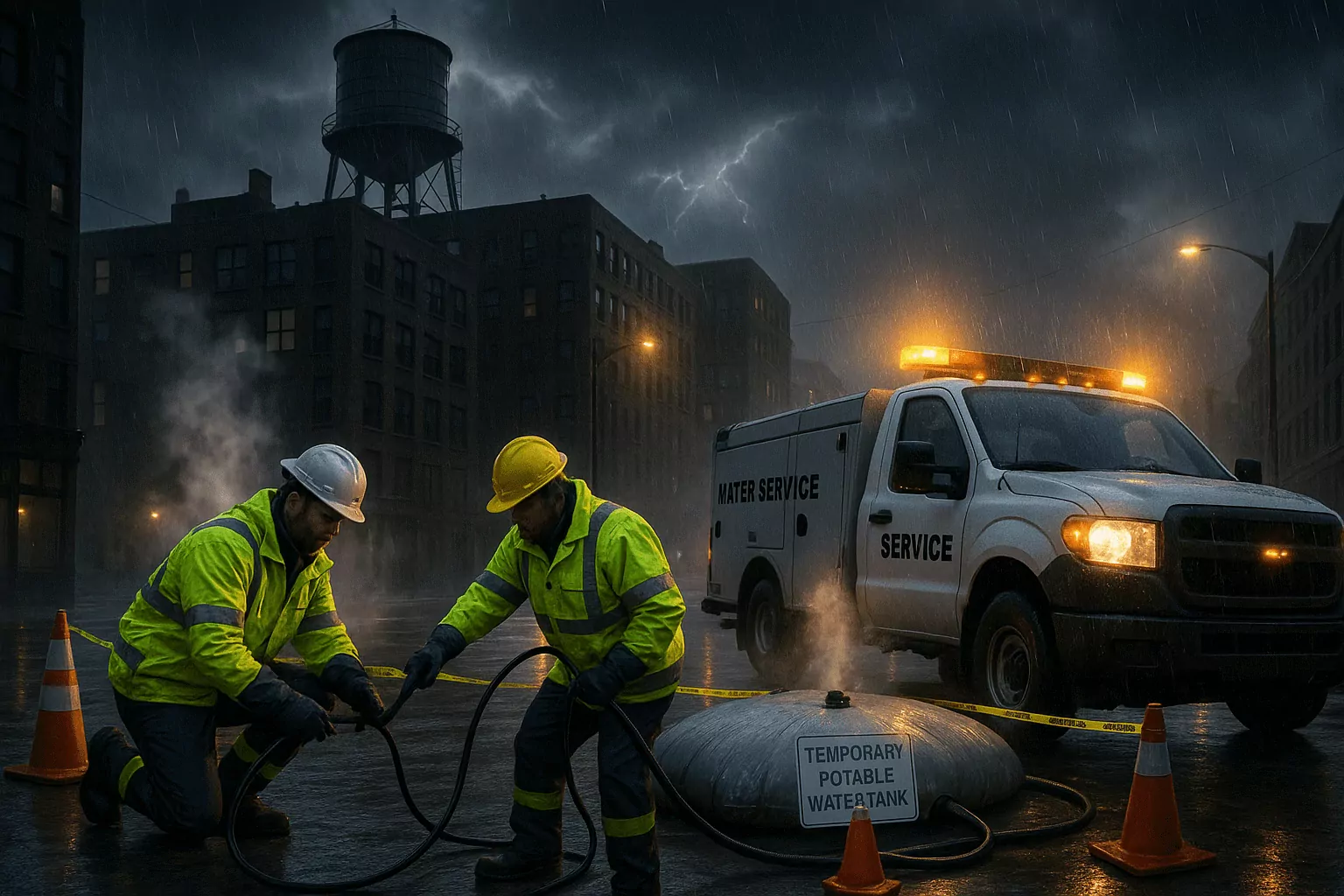
When service cannot pause, crews implement emergency water storage solutions to keep taps flowing and fire protection reliable. Options include potable water tankers, foodâgrade bladder tanks, and modular aboveâground units sized to your demand profile. A temporary bypass can route around failed components, with backflow protection and monitored disinfection. For multiâtenant or healthcare settings, critical zones get prioritized capacity and pressure control to maintain sanitation, kitchens, and clinical rooms. With realâtime monitoring, teams adjust volumes and dosing until permanent repairs or rapid water tank replacement is complete.
Strategic stabilization reduces costly shutdowns and reputational risk for commercial sites. Crews map consumption peaks, then rightâsize storage and trucking intervals to prevent shortfalls. They maintain documented chlorine residuals and bacteriological safety for potable uses throughout the stopgap period. Clear signage and communication help occupants understand temporary changes in pressure or taste while safety remains assured. Once permanent fixes land, the bypass is decommissioned, and the system returns to normal operations with a verified clean bill of health.
Common Failures and Fast Fixes
Water Tank Leak Repair Near Me: Finding and Stopping Active Leaks
Active leaks demand a methodical search beginning at fittings, seams, and penetrations most prone to thermal and mechanical stress. Technicians trace flow paths, mark weeps and jets, and test isolation valves to localize failure points. Temporary measures like mechanical clamps, epoxyârated patches, and internal bladders can halt loss long enough for a permanent fix. Materials selection depends on tank substrate, temperature, pressure, and potable classification. With water tank leak repair near me requests, proximity matters because swift arrival limits structural damage and mold growth.
Permanent repairs may involve welding, hot work, or panel and gasket replacement, each planned for safety and compliance. For lined or coated tanks, crews match coating systems and cure times to avoid future delamination. If corrosion is advanced, they evaluate the economics of repair versus rapid water tank replacement to prevent repeat outages. Pressure normalization follows, with careful rampâup and monitoring for seepâbacks or microâleaks that escaped initial testing. Final documentation confirms integrity and informs preventive maintenance scheduling.
24/7 Water Tank Repair for Pumps, Valves, and Controls
Not all emergencies are structural; many start with failing pumps, stuck valves, or control faults that starve systems of pressure. Technicians benchâtest motors, check megger readings, inspect impellers, and review VFD fault histories to pinpoint causes. Valve work may include packing, actuation checks, or full replacement when seats or stems are compromised. Controls teams correct sensor drift, recalibrate level transmitters, and restore alarming to prevent dry runs or overflows. Responsive 24/7 water tank repair restores stability while averting cascading failures throughout the network.
After stabilization, crews fineâtune setpoints to balance energy efficiency and supply resilience. Critical sites often receive redundant pumps, surge protection, and failover logic to harden the system. Parts inventories and standardized components shorten future repair windows and simplify training. A concise punch list, warranty terms, and recommended spares close the loop for operators. Documented changes help your staff troubleshoot faster the next time a warning light blinks.
Rapid Water Tank Replacement When Repairs Won't Hold
Some tanks reach end of life, where patching only delays the inevitable and multiplies risk. Teams evaluate shell thickness, pitting, coating failure, and structural support to decide on rapid water tank replacement. A coordinated plan sequences bypass, demolition, rigging, install, and disinfection to compress downtime. Preâfabricated units and crane windows allow overnight swaps for many commercial systems. Clear communication with occupants, authorities, and insurers keeps the project predictable from start to turnover.
Replacement is also a chance to rightâsize capacity and improve access for future maintenance. New tanks often feature better coatings, mixing, and level sensing to control stratification and biofilm. Controls integrate with building management for alarms that prevent surprises. Postâinstallation, crews validate pressure, flow, residuals, and bacteriological safety before bringing the tank fully online. A maintenance calendar locks in cleaning, inspection, and testing milestones for reliable longâterm service.
Health, Compliance, and Quality Assurance
Urgent Water Tank Cleaning to Restore Potability
Contamination events demand urgent water tank cleaning to protect health and comply with code. Crews isolate the tank, drain safely, and remove sludge, scale, and biofilm using approved methods. Mechanical cleaning combines soft brushing, lowâpressure washing, and vacuum recovery to avoid coating damage. For potable tanks, hygienic practices and foodâgrade equipment prevent reintroduction of microbes. A controlled refill with monitored residuals ensures water reenters service safely.
In hospitals, schools, and food facilities, urgent water tank cleaning often pairs with temporary supply to keep operations open. Teams document chain of custody for disinfectants and rinse water to pass audits. If sediments stem from upstream issues, they recommend filtration or mixing upgrades to reduce recurrence. Postâclean sampling verifies turbidity, chlorine, and microbial metrics against standards. The result is safer water, fewer odors or discoloration complaints, and stronger public confidence.
Disinfection, Testing, and Documentation for Code Compliance
After repairs or replacement, disinfection and testing are nonânegotiable for potable systems. Crews apply AWWAârecognized disinfection methods, hold times, and neutralization before discharge. Certified labs run bacteriological tests, and technicians confirm chlorine residuals at representative points. Documentation includes methods, dosages, hold times, lab certificates, and a returnâtoâservice report. Regulators and insurers rely on this record to verify the system is safe and compliant.
Facilities benefit from a standardized binder or digital portal housing all service records. This speeds audits and helps trend performance over seasons or operating modes. It also streamlines future emergency water tank services near me by giving dispatchers immediate context. With clear evidence, you reduce disputes, accelerate approvals, and protect brand trust. Compliance becomes routine rather than a lastâminute scramble.
Preventive Upgrades That Reduce Future Emergencies
Small upgrades can avert big emergencies and shorten any future 24/7 water tank repair. Smart level sensors and mixing systems prevent stratification that fuels biofilm and taste issues. Cathodic protection and modern coatings slow corrosion, extending tank life significantly. Remote monitoring alerts staff to leaks, overflows, or pump faults before they snowball. With targeted investments, you shift from firefighting to predictable maintenance.
Operators also gain safer access and faster service with improved ladders, platforms, and lighting. Standardized valves and quickâconnects make bypasses and emergency water storage solutions faster to deploy. Backup power for controls and critical pumps keeps supply steady during outages. A living maintenance plan aligns cleaning, inspections, and lab testing to seasonal demand. Over time, fewer callouts and smoother operations pay back the upgrade costs.
Choosing the Right Local Partner
What to Ask Before Booking Emergency Water Tank Services Near Me
Strong providers welcome tough questions because readiness shows in details. Ask about licensing, confined space credentials, and potable water handling experience. Clarify whether the team can deliver water tank leak repair near me, urgent water tank cleaning, and temporary supply in one visit. Request sample reports and warranties to judge workmanship and accountability. Verify fleet size, parts inventory, and local coverage to ensure true 24/7 response.
Probe safety culture, including job hazard analyses and continuous training practices. Confirm they carry appropriate insurance and can name your facility on a certificate when required. Discuss how they protect occupants during noisy or disruptive work. Understand their escalation path if initial fixes do not hold after startup. Clear answers now prevent costly surprises later.
Transparent Pricing, Warranties, and Response SLAs
Emergency work should still come with clear pricing logic and commitments. Top firms offer written estimates with ranges, notâtoâexceed caps, and timeâandâmaterials detail. Response SLAs define dispatch windows, onsite arrival targets, and communication cadence. Warranties spell out coverage for materials, workmanship, and reâmobilization if defects appear. These guardrails align expectations while preserving agility for fast field decisions.
Ask what is included in mobilization, diagnostic labor, consumables, and disposal fees. Clarify premium rates for nights, weekends, and holidays so there are no surprises. Confirm how change orders are handled and approved when scope shifts. Good partners also share costâsaving options, including staged repairs and rapid water tank replacement where it's more economical. Financial clarity lets you focus on safety and uptime instead of spreadsheets.
Service Coverage: Homes, HOAs, Hospitals, and Commercial Sites
Needs vary by site, and seasoned teams tailor their playbook accordingly. Homes and HOAs often need fast leak control and safe potable restoration with minimal disruption. Hospitals and labs prioritize continuous service, hygienic controls, and validated disinfection with meticulous documentation. Industrial and retail sites value speed, coordinated cranes, and offâhours work to protect business continuity. A versatile provider brings the right mix of people and gear to each setting.
Fleet assets include vacuum trucks, potable tankers, lift gear, and test equipment scaled for tight or highârise access. Crews coordinate permits and traffic plans where rigging or road access is required. They can sustain temporary supply using emergency water storage solutions while permanent 24/7 water tank repair proceeds. If failure is terminal, the same team manages rapid water tank replacement to close the loop. This endâtoâend capability keeps your response simple: one call, full coverage.
Frequently Asked Questions
How fast can a crew arrive for emergency water tank services near me?
Most reputable providers quote a dispatch window within minutes and onsite arrival in one to four hours, depending on distance and traffic. Urban cores often see faster response times due to fleet density and dedicated night crews. Highâpriority sites like hospitals or large residential complexes may receive immediate deployment. If supply interruption risks health or safety, teams activate temporary bypass or emergency water storage solutions upon arrival. Clear intake details help route the closest qualified technicians with the right parts. Always ask for live ETA updates and a named crew lead for accountability.
What should I do before technicians arrive to limit damage?
Shut isolation valves feeding the affected tank or zone and kill power to related pumps if it is safe to do so. Keep people clear of slippery surfaces, electrical panels, and elevated areas near compromised tanks. Set out absorbents or buckets under active leaks to protect finishes while you wait. If potable contamination is suspected, post notices and avoid consumption until professionals confirm safety. Gather maintenance logs, recent photos, and asâbuilts to speed diagnostics when the crew arrives. Ensure clear access for service trucks, and secure pets or sensitive equipment nearby.
Can you keep water service running during urgent water tank cleaning or repairs?
Yes, many jobs maintain service using bypass piping, potable tankers, or bladder tanks sized to your demand. Crews install backflow protection, manage pressure, and monitor chlorine residuals to keep water safe during the interim. Critical zones like kitchens, restrooms, and care areas get priority flow controls and quality checks. For noisy or intrusive work, teams schedule offâpeak hours to reduce impact on occupants. After repairs or cleaning, the system is disinfected, sampled, and documented before full return to service. This approach balances safety, compliance, and continuity without unnecessary shutdowns.